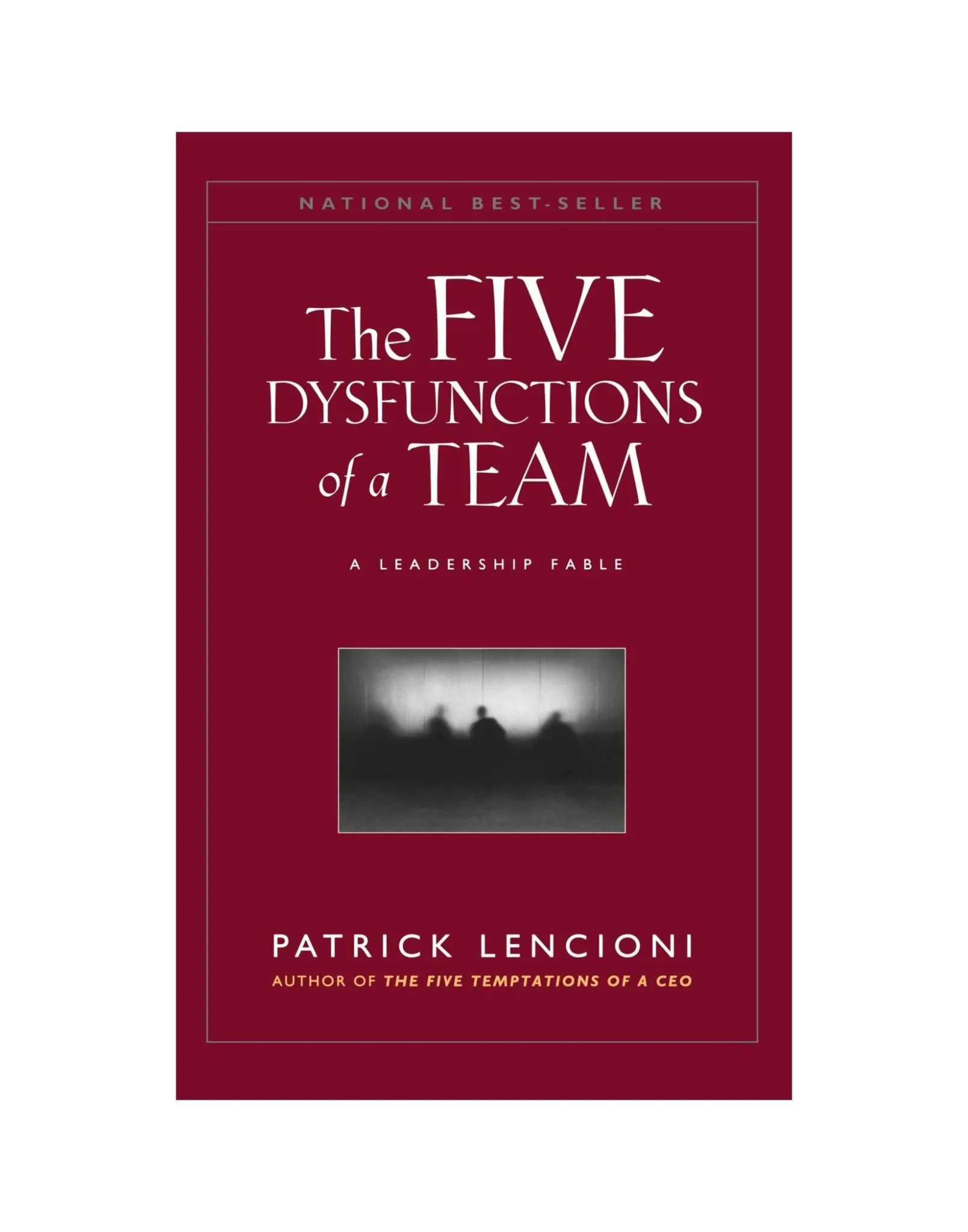
The Five Dysfunctions of a Team: A Leadership Fable (link) by Patrick Lencioni
This book has been on my TBR for quite a while. I had it on the list due to the number of times it was recommended to me, or that I found it on a “must read” list. Finally, I picked it up and was glad that I did. I have discovered that if I am going to read a book teaching these types of skills I really do prefer the “Fable” style of learning.
I do wish that I could read a book from the perspective of the people who work for the leadership team in this book and see how the decisions they made changed the day to day lives of the rest of the employees.
“If you could get all the people in an organization rowing in the same direction, you could dominate any industry, in any market, against any competition, at any time.”
It is better to make a decision boldly and be wrong — and then change direction with equal boldness—than it is to waffle.
“… a fractured team is just like a broken arm or leg; fixing it is always painful, and sometimes you have to rebreak it to make it heal correctly. And the rebreaking hurts a lot more than the initial break, because you have to do it on purpose.”
“…Exactly. The point here is that most reasonable people don’t have to get their way in a discussion. They just need to be heard, and to know that their input was considered and responded to.”
Key Thoughts:
- The first thing that occurred to me is that it is hard to read a book like this when I do not have a clear understanding of who my “team” is. I have coworkers and in some cases it is clear who is not on my team, but it is less clear who is. This is something that I think I have struggled with for a while and it has affected me more that I know.
- I was extremely glad to read this book as I know that it is one that the FMG C-Team currently uses. It helped me to see more clearly where some of the things that are passed down came from.
- Katherine has the discipline and mental fortitude needed to lead a group of hard headed, intelligent, executives to become a successful team. How does a person become a leader like that?
- I really liked the description at the end of the book about cascading messaging. “at the end of the [meeting] the team should explicitly review the key decisions made during the meeting, and agree on what needs to be communicated downstream…” How do we apply this at a lower level within the teams?
- How can we make our engineering department one that can run at a high rate of success and productivity without burning out our engineers and ourselves. Understanding how to build a department with solid processes and decision making skills will be the key to our success.
- People management is hard. 🤣
Potential Action Items:
- Team Survey: Can I do something similar to this for our workflows and processes to see areas for growth?
- Absence of Trust: Help to define “teams” so that each person has a clear idea who is on their team. This includes guilds like the React and SQL ones.
- Absence of Trust: Could we do peer reviews within the teams? Each person list skills that the others are good at as well as things they need to work on. Then the results are reviewed by someone outside the team, probably not a manager. Keeping the results outside of the hands of anyone who helps to pay the bills would aid in fostering trust.
- Fear of Conflict: Have teams struggling take Meyers Briggs or some other personality test to see how the team members compare against each other. If you have too many of one type of personality on a team that could cause unhealthy conflict.
- Lack of Commitment: Think through the idea of cascading messaging and see how that could apply with the meetings that I am a part of.
- Lack of Commitment: Find ways to clearly communicate deadlines to the teams. Make sure that they see on a regular basis what the goals are and what is expected.
- Lack of Commitment: If we are going to find a way to communicate deadlines, we also need to work together to make sure we have clearly set deadlines and expectations. The more handwavy the goal is the less likely it is to be completed.
- Avoidance of Accountability: Retrospectives, provide an easy way for teams to review reports and data about the previous 2 weeks so that they can review the most important things.
- Inattention to Results: Help to make sure that the collective goal of the team is clearly laid out in a place that they easily access. Quarterly goals is a start, but what is the micro-goal that the team is currently working towards. In Sprints it would be the Sprint goal, how do we do something similar with where we are at now?
Book Summary – Overcoming the Five Dysfunctions of a Team

 Amy's Tech Notes