Cultivating Lifelong Learning for Career Growth

Recently, a close friend lost their job unexpectedly, and it got me thinking about the uncertainty in today’s job market. Over the years, I’ve seen friends and family struggle to find meaningful work. Now, many are just trying to find any work at all. I feel grateful for the stability of my current role, but I’m always aware that it may not last forever. What advice can I offer to those searching for work? What steps am I taking to prepare for the unexpected?

1. Make Learning a Lifelong Habit

As kids, we counted the days until school was over—unless you were like me and actually enjoyed it. But after college, things become less structured. The one thing school didn’t teach me was how to teach myself. It took me years to develop this skill. Books like “Ultralearning,” “Atomic Habits,” and “Deep Work” have been particularly inspiring for me this year. These resources have helped me discover how to learn effectively on my own terms.

2. Organize Your Life for Growth

Organizing your life doesn’t have to mean rigid planning. It’s about understanding your responsibilities and finding time to focus on personal growth. Tools like the HB90 program by Sarra Cannon at Heartbreathings, combined with books like “Slow Productivity,” have helped me re-evaluate my priorities and goals. I find that even when I don’t stick to my plans, I’m still moving toward my objectives. Periodically revisiting my goals helps me stay on track.

3. Cultivate Adaptability

Being too rigid can hinder progress. Life will throw obstacles your way, and the key to success is navigating around them. Earlier this year, I had to adapt to new responsibilities—some by choice, others not. These changes required adjusting my schedule, but I’ve managed to meet my goals while still growing in new ways. Being adaptable is essential for overcoming unexpected challenges. Bob Galen at Agile Moose is a big proponent of journaling to help understand the complexities of life and career. Keeping a journal can help you reflect on your experiences, track changes, and adapt to new circumstances.

4. Prioritize Your Health

Everyone knows the importance of living a healthy life, but it’s often hard to prioritize. Investing in your health is crucial, as neglecting it can lead to irreversible damage. Books like “Outlive” and “Atomic Habits,” along with health & fitness influencers on YouTube, have been my go-to resources for staying inspired and learning more about wellness. While I still have a long way to go, I’ve made significant improvements in recent months, and the benefits are subtle but undeniable.

Weaving Life and Career Together

Notice that none of these points directly address careers. That’s intentional. Integrating your life and goals with your career is crucial. When I stopped living just to make my bosses happy, I began to grow more than ever. Everything I focus on outside my 9-5 strengthens my career and makes me more resilient.

The Point of It All

The core message here is to focus on building yourself. Develop a toolkit of skills and surround yourself with people who can offer guidance and support. Don’t shy away from challenges; instead, be open to change and growth. By doing so, you’ll not only navigate uncertainty but thrive in it.

Book Review – Ultralearning

Ultralearning: Master Hard Skills, Outsmart the Competition, and Accelerate Your Career by Scott Young

Ultralearning is a book that caught my attention due to its promise of revolutionizing the way we approach learning. As someone who has been on a personal journey to be more intentional with my learning, this book offered a refreshing perspective. Over the years, I found that rigid learning plans often stifled my curiosity. It wasn’t until I embraced my interests and allowed myself to explore them organically that I truly started to make progress. This approach aligns beautifully with Scott Young’s philosophy in Ultralearning.

Scott Young does an exceptional job of delving into the science of learning. His extensive research and engaging narrative make the book not just informative but also highly readable. He presents strategies that challenge conventional learning methods, advocating for a more self-directed and intense approach to mastering skills.

“The best ultralearners are those who blend the practical reasons for learning a skill with an inspiration that comes from something that excites them.”

“Learning, at its core, is a broadening of horizons, of seeing things that were previously invisible and of recognizing capabilities within yourself that you didn’t know existed.”

“Ultralearning is a strategy for acquiring skills and knowledge that is both self-directed and intense. It’s a strategy that can be applied to a wide range of learning tasks, from languages to business skills to personal development.”

Key Thoughts

  • Embracing curiosity is crucial. When I stopped forcing myself to stick to a strict learning plan and instead followed my interests, I noticed significant improvement in my skills. This aligns with Young’s emphasis on self-directed learning.
  • The book encourages a mindset shift from passive learning to active engagement. It’s not about memorizing facts but about deeply understanding concepts and applying them.
  • Young’s approach to learning is intense but rewarding. It’s about diving deep into a subject, tackling challenges head-on, and pushing the boundaries of what you think you can achieve.
  • One of the book’s core messages is that learning is a lifelong journey. As I start looking towards the end of my career I am focusing more on what I can learn to help me grow versus just earning a paycheck.
  • The idea of “ultralearning” extends beyond personal goals. It’s about inspiring others, including children, to embrace learning as a dynamic and enjoyable process.

Questions to Ponder

  • How can I apply the principles of ultralearning to my current interests and projects?
  • In what ways can I encourage my children to become self-directed learners?
  • What skills do I want to master, and how can I structure my learning to achieve these goals?
  • How can I balance the intensity of ultralearning with maintaining a well-rounded life?

A Few Tools for Embracing Ultralearning

  • Focus on active recall and practice testing to reinforce learning.
  • Break down complex subjects into manageable chunks and tackle them systematically.
  • Use feedback loops to identify areas for improvement and adjust learning strategies accordingly.
  • Embrace challenges and view them as opportunities for growth rather than obstacles.
  • Encourage a culture of curiosity and continuous learning in your personal and professional life.

In conclusion, Ultralearning by Scott Young offers valuable insights into mastering skills and accelerating personal growth. While the approach is intense, it is also highly rewarding, fostering a deeper understanding and appreciation for the learning process. As I continue my journey, I am inspired to apply these principles not only to my life but also to guide my children in their learning adventures.

Book Review – Deep Work: Rules for Focused Success in a Distracted World

Deep Work: Rules for Focused Success in a Distracted World by Cal Newport

I recently dove into Cal Newport’s Deep Work and found it to be a compelling read that helped me refine my approach to productivity. Unlike many self-help books that offer superficial tips and tricks, Newport provides a deep exploration into the power of focused work in an world dominated by distractions and split focus. His argument is simple yet transformative: the ability to concentrate without distraction on a cognitively demanding task is becoming increasingly rare—and those who cultivate this skill will thrive.

Newport defines “deep work” as the activities performed in a state of distraction-free concentration that push your mental capabilities to their limit. This, he argues, is the key to achieving exceptional results in one’s professional life. He contrasts this with “shallow work,” which consists of tasks that are logistical in nature and can be performed while distracted. Newport emphasizes that shallow work is often mistaken for productivity, yet it rarely produces meaningful outcomes.

The Deep Work Hypothesis: The ability to perform deep work is becoming increasingly rare at exactly the same time it is becoming increasingly valuable in our economy. As a consequence, the few who cultivate this skill, and then make it the core of their working life, will thrive.

Clarity about what matters provides clarity about what does not.

If you don’t produce, you won’t thrive—no matter how skilled or talented you are.

Idleness is not just a vacation, an indulgence or a vice; it is as indispensable to the brain as vitamin D is to the body, and deprived of it we suffer a mental affliction as disfiguring as rickets… it is, paradoxically, necessary to getting any work done.

At the end of the workday, shut down your consideration of work issues until the next morning—no after-dinner e-mail check, no mental replays of conversations, and no scheming about how you’ll handle an upcoming challenge; shut down work thinking completely.

Key Thoughts

  1. Deep Work is a Skill: Newport insists that deep work is not a habit but a skill that requires practice. He compares it to learning a musical instrument or a new language—it’s challenging but rewarding.
  2. The Four Rules of Deep Work: Newport lays out four rules: Work Deeply, Embrace Boredom, Quit Social Media, and Drain the Shallows. Each rule offers practical advice on cultivating focus and minimizing distractions.
    1. Embrace Boredom: Newport suggests that we should embrace boredom rather than constantly seeking entertainment. Training your brain to resist distractions strengthens your ability to focus.
    2. Quit Social Media: One of Newport’s more controversial suggestions is to quit social media, where that isn’t possible reduce the need to use it as much as possible. He argues that these platforms are a significant source of shallow work and distractions.
    3. Work Deeply: Newport provides strategies for creating a deep work environment by minimizing interruptions and distractions. He recommends setting up a workspace dedicated to focus and concentration, rather than shallow work. Another strategy he suggests is to find alternative locations that are outside your normal space that can inspire deeper concentration, such as libraries, quiet cafes, or secluded areas in your home.
    4. Drain the Shallows: Newport encourages taking some time to do a full evaluation of the shallow work that fills your day. If someone else can be trained to do the work in a short period of time, the work is considered shallow. These are often tasks that can be delegated or automated. This is the work that you should try to get off your plate so as to leave more time for deep work —the work that truly leverages your expertise and brings the most value.

Questions to Ponder

  • How much of your workday is spent on shallow work versus deep work?
  • What are the distractions that most frequently pull you away from deep work?
  • How can you redesign your work environment to better support deep work?
  • Are there activities or commitments you can eliminate to make more time for deep work?
  • What alternative locations can deep work be done at?
  • Are there patterns you can build into your day to draw a clear line between work and personal life?
  • Do you have a way to organize your work so that you always know what you will do in your next deep work session?

A Few Tools for Embracing Deep Work

  1. Time Blocking: Allocate specific blocks of time for deep work and stick to them religiously.
  2. Ritualize: Develop a routine that signals the start of a deep work session. This could be as simple as a specific playlist or a particular workspace setup.
  3. The 4DX Framework: Use the Four Disciplines of Execution to set clear goals and track progress.
  4. Limit Shallow Work: Set strict limits on the amount of time spent on shallow work tasks like emails and meetings.
  5. Deep Work Sprints: Schedule regular, short sprints of deep work to build the habit gradually.

Newport’s Deep Work is an essential read for anyone looking to enhance their productivity and achieve meaningful results in their professional life. By embracing deep work, we can navigate the distractions of the modern world and cultivate a work ethic that leads to success and fulfillment.

Thinking Slowly

An evening sitting with a pen and a notebook reminds me that slowing down is productive too. Listing to friends talk about ancient history I am gently asking myself what are the most important things I should be focusing on for myself. I am in the middle of a solid period of change in my life and slowing down is key for me to succeed in this transition.

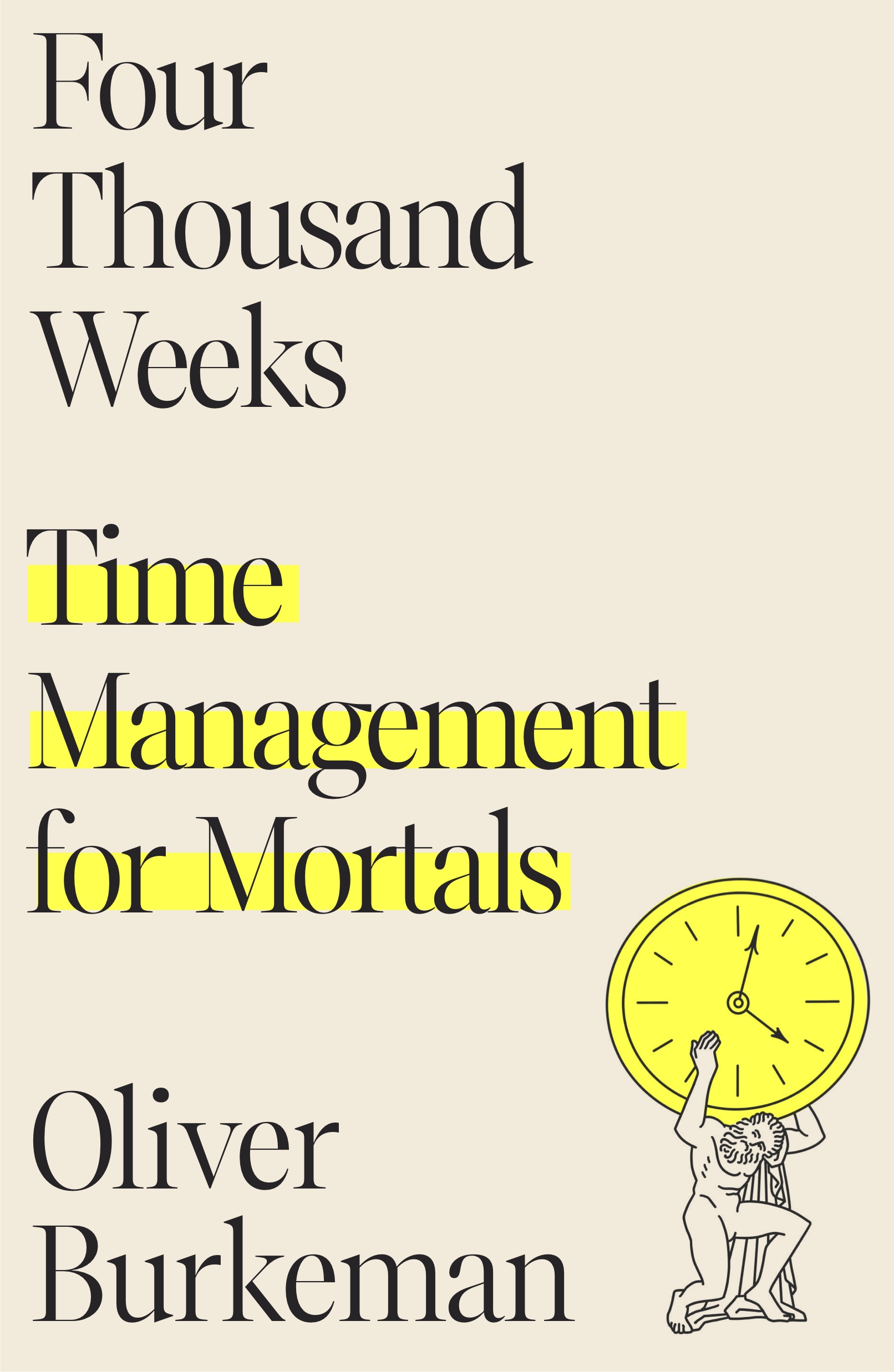
Book Review: Four Thousand Weeks: Time Management for Mortals

Four Thousand Weeks: Time Management for Mortals

(link) by Oliver Burkeman

This book is a shorter one that I binge listened to while on a road trip. It isn’t your typical productivity book where they tell you how to “hack” your life to find every second that should be spent “doing” things. I found the message in it to be one that gave me a good reminder that life is short and we need to be careful about where and how we spend our time. The same applies to the work we do. We only give our employer so many hours of the day, it is our responsibility to make sure that we spend those hours wisely so that the value they gain is worth it.

“what you pay attention to will define, for you, what reality is.”

“Productivity is a trap. Becoming more efficient just makes you more rushed, and trying to clear the decks simply makes them fill up again faster. Nobody in the history of humanity has ever achieved “work-life balance,” whatever that might be, and you certainly won’t get there by copying the “six things successful people do before 7:00 a.m.” The day will never arrive when you finally have everything under control—when the flood of emails has been contained; when your to-do lists have stopped getting longer; when you’re meeting all your obligations at work and in your home life; when nobody’s angry with you for missing a deadline or dropping the ball; and when the fully optimized person you’ve become can turn, at long last, to the things life is really supposed to be about. Let’s start by admitting defeat: none of this is ever going to happen. But you know what? That’s excellent news.”

“The day will never arrive when you finally have everything under control—when the flood of emails has been contained; when your to-do lists have stopped getting longer; when you’re meeting all your obligations at work and in your home life; when nobody’s angry with you for missing a deadline or dropping the ball; and when the fully optimized person you’ve become can turn, at long last, to the things life is really supposed to be about. Let’s start by admitting defeat: none of this is ever going to happen.”

“The real measure of any time management technique is whether or not it helps you neglect the right things.”

Key Thoughts

  • Accepting the shortness of life is both a positive and negative realization. Spending too much time pondering it can bring anxiety and worry. Not spending time pondering it allows for wasting too much of it and not appreciating it.
  • Todays world is filled with tools, gadgets, and things to make our lives easier. But do they? What do we gain by using the dishwasher over hand washing if we are just going to spend that time doom scrolling through social media apps. But spending that time being “productive” is just as bad, it brings on stress and other issues.
  • List all the things you want to do with your life. Choose the top 5. Accept that you will probably never do any of the bottom 15. Take those off your list completely rather than sitting and worrying about never accomplishing them.
  • Becoming better at procrastinating is a concept that I never considered as a goal in life. But they had a great point. Making sure to drop the things that aren’t bringing joy and value to you and your life is something that is worth doing.
  • Working remotely takes away some of the human interaction that is necessary
  • Questions to ponder
    1. Where in your life or your work are you currently pursuing comfort, when what’s called for is a little discomfort?
    2. Are you holding yourself to, and judging yourself by, standards of productivity or performance that are impossible to meet?
    3. In what ways have you yet to accept the fact that you are who you are, not the person you think you ought to be
    4. In which areas of life are you still holding back until you feel like you know what you’re doing?
    5. How would you spend your days differently if you didn’t care so much about seeing your actions reach fruition?

A few tools for embracing our finiteness

  1. Adopt a “fixed volume” approach to productivity. Keep two to-do lists, one “open” and one “closed.” The open list is for everything that’s on your plate and will doubtless be nightmarishly long. Fortunately, it’s not your job to tackle it: instead, feed tasks from the open list to the closed one—that is, a list with a fixed number of entries, ten at most. The rule is that you can’t add a new task until one’s completed.
    1. Establish predetermined time boundaries for your daily work. Train yourself to get incrementally better at tolerating that anxiety, by consciously postponing everything you possibly can, except for one thing.
  2. Focus on one big project at a time.
  3. Strategic underachievement—that is, nominating in advance whole areas of life in which you won’t expect excellence of yourself—is that you focus that time and energy more effectively
  4. Focus on what you’ve already completed, not just on what’s left to complete.
  5. Keep a “done list,” which starts empty first thing in the morning, and which you then gradually fill with whatever you accomplish through the day.
  6. Reduce phone distractions as possible—first by removing social media apps, even email if you dare, and then by switching the screen from colour to grayscale. Choose devices with only one purpose, such as the Kindle ereader, on which it’s tedious and awkward to do anything but read
  7. Pay more attention to every moment, however mundane: to find novelty not by doing radically different things but by plunging more deeply into the life you already have. Experience life with twice the usual intensity. When presented with a challenging or boring moment, try deliberately adopting an attitude of curiosity.
  8. Act on the impulse right away, rather than putting it off until later.
  9. Do Nothing” meditation, for which the instructions are to simply set a timer, probably only for five or ten minutes at first; sit down in a chair; and then stop trying to do anything. Nothing is harder to do than nothing.