
Cultivating Lifelong Learning for Career Growth

Recently, a close friend lost their job unexpectedly, and it got me thinking about the uncertainty in today’s job market. Over the years, I’ve seen friends and family struggle to find meaningful work. Now, many are just trying to find any work at all. I feel grateful for the stability of my current role, but I’m always aware that it may not last forever. What advice can I offer to those searching for work? What steps am I taking to prepare for the unexpected?

1. Make Learning a Lifelong Habit

As kids, we counted the days until school was over—unless you were like me and actually enjoyed it. But after college, things become less structured. The one thing school didn’t teach me was how to teach myself. It took me years to develop this skill. Books like “Ultralearning,” “Atomic Habits,” and “Deep Work” have been particularly inspiring for me this year. These resources have helped me discover how to learn effectively on my own terms.

2. Organize Your Life for Growth

Organizing your life doesn’t have to mean rigid planning. It’s about understanding your responsibilities and finding time to focus on personal growth. Tools like the HB90 program by Sarra Cannon at Heartbreathings, combined with books like “Slow Productivity,” have helped me re-evaluate my priorities and goals. I find that even when I don’t stick to my plans, I’m still moving toward my objectives. Periodically revisiting my goals helps me stay on track.

3. Cultivate Adaptability

Being too rigid can hinder progress. Life will throw obstacles your way, and the key to success is navigating around them. Earlier this year, I had to adapt to new responsibilities—some by choice, others not. These changes required adjusting my schedule, but I’ve managed to meet my goals while still growing in new ways. Being adaptable is essential for overcoming unexpected challenges. Bob Galen at Agile Moose is a big proponent of journaling to help understand the complexities of life and career. Keeping a journal can help you reflect on your experiences, track changes, and adapt to new circumstances.

4. Prioritize Your Health

Everyone knows the importance of living a healthy life, but it’s often hard to prioritize. Investing in your health is crucial, as neglecting it can lead to irreversible damage. Books like “Outlive” and “Atomic Habits,” along with health & fitness influencers on YouTube, have been my go-to resources for staying inspired and learning more about wellness. While I still have a long way to go, I’ve made significant improvements in recent months, and the benefits are subtle but undeniable.

Weaving Life and Career Together

Notice that none of these points directly address careers. That’s intentional. Integrating your life and goals with your career is crucial. When I stopped living just to make my bosses happy, I began to grow more than ever. Everything I focus on outside my 9-5 strengthens my career and makes me more resilient.

The Point of It All

The core message here is to focus on building yourself. Develop a toolkit of skills and surround yourself with people who can offer guidance and support. Don’t shy away from challenges; instead, be open to change and growth. By doing so, you’ll not only navigate uncertainty but thrive in it.
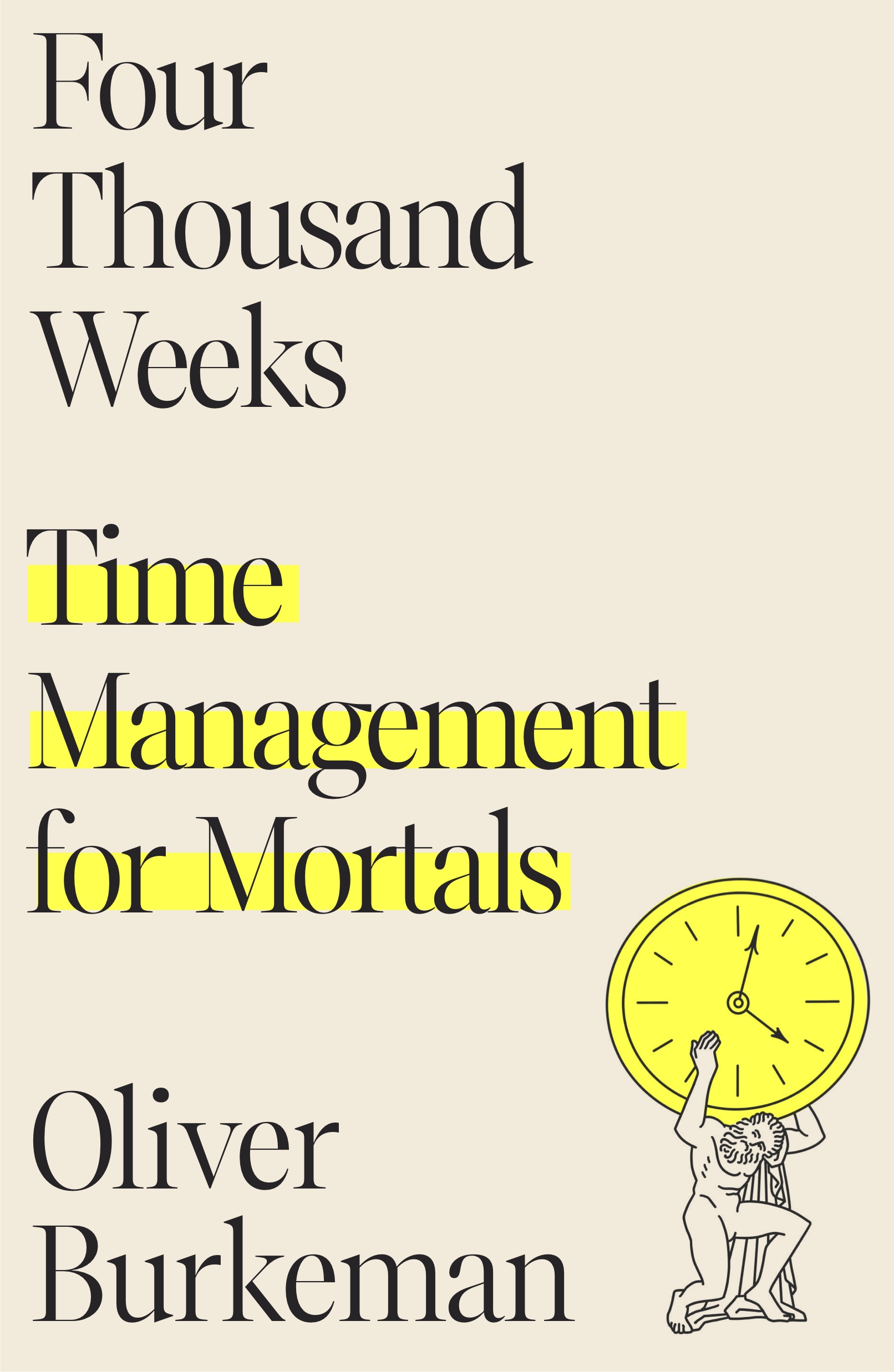
Book Review: Four Thousand Weeks: Time Management for Mortals

Four Thousand Weeks: Time Management for Mortals

(link) by Oliver Burkeman

This book is a shorter one that I binge listened to while on a road trip. It isn’t your typical productivity book where they tell you how to “hack” your life to find every second that should be spent “doing” things. I found the message in it to be one that gave me a good reminder that life is short and we need to be careful about where and how we spend our time. The same applies to the work we do. We only give our employer so many hours of the day, it is our responsibility to make sure that we spend those hours wisely so that the value they gain is worth it.

“what you pay attention to will define, for you, what reality is.”

“Productivity is a trap. Becoming more efficient just makes you more rushed, and trying to clear the decks simply makes them fill up again faster. Nobody in the history of humanity has ever achieved “work-life balance,” whatever that might be, and you certainly won’t get there by copying the “six things successful people do before 7:00 a.m.” The day will never arrive when you finally have everything under control—when the flood of emails has been contained; when your to-do lists have stopped getting longer; when you’re meeting all your obligations at work and in your home life; when nobody’s angry with you for missing a deadline or dropping the ball; and when the fully optimized person you’ve become can turn, at long last, to the things life is really supposed to be about. Let’s start by admitting defeat: none of this is ever going to happen. But you know what? That’s excellent news.”

“The day will never arrive when you finally have everything under control—when the flood of emails has been contained; when your to-do lists have stopped getting longer; when you’re meeting all your obligations at work and in your home life; when nobody’s angry with you for missing a deadline or dropping the ball; and when the fully optimized person you’ve become can turn, at long last, to the things life is really supposed to be about. Let’s start by admitting defeat: none of this is ever going to happen.”

“The real measure of any time management technique is whether or not it helps you neglect the right things.”

Key Thoughts

  • Accepting the shortness of life is both a positive and negative realization. Spending too much time pondering it can bring anxiety and worry. Not spending time pondering it allows for wasting too much of it and not appreciating it.
  • Todays world is filled with tools, gadgets, and things to make our lives easier. But do they? What do we gain by using the dishwasher over hand washing if we are just going to spend that time doom scrolling through social media apps. But spending that time being “productive” is just as bad, it brings on stress and other issues.
  • List all the things you want to do with your life. Choose the top 5. Accept that you will probably never do any of the bottom 15. Take those off your list completely rather than sitting and worrying about never accomplishing them.
  • Becoming better at procrastinating is a concept that I never considered as a goal in life. But they had a great point. Making sure to drop the things that aren’t bringing joy and value to you and your life is something that is worth doing.
  • Working remotely takes away some of the human interaction that is necessary
  • Questions to ponder
    1. Where in your life or your work are you currently pursuing comfort, when what’s called for is a little discomfort?
    2. Are you holding yourself to, and judging yourself by, standards of productivity or performance that are impossible to meet?
    3. In what ways have you yet to accept the fact that you are who you are, not the person you think you ought to be
    4. In which areas of life are you still holding back until you feel like you know what you’re doing?
    5. How would you spend your days differently if you didn’t care so much about seeing your actions reach fruition?

A few tools for embracing our finiteness

  1. Adopt a “fixed volume” approach to productivity. Keep two to-do lists, one “open” and one “closed.” The open list is for everything that’s on your plate and will doubtless be nightmarishly long. Fortunately, it’s not your job to tackle it: instead, feed tasks from the open list to the closed one—that is, a list with a fixed number of entries, ten at most. The rule is that you can’t add a new task until one’s completed.
    1. Establish predetermined time boundaries for your daily work. Train yourself to get incrementally better at tolerating that anxiety, by consciously postponing everything you possibly can, except for one thing.
  2. Focus on one big project at a time.
  3. Strategic underachievement—that is, nominating in advance whole areas of life in which you won’t expect excellence of yourself—is that you focus that time and energy more effectively
  4. Focus on what you’ve already completed, not just on what’s left to complete.
  5. Keep a “done list,” which starts empty first thing in the morning, and which you then gradually fill with whatever you accomplish through the day.
  6. Reduce phone distractions as possible—first by removing social media apps, even email if you dare, and then by switching the screen from colour to grayscale. Choose devices with only one purpose, such as the Kindle ereader, on which it’s tedious and awkward to do anything but read
  7. Pay more attention to every moment, however mundane: to find novelty not by doing radically different things but by plunging more deeply into the life you already have. Experience life with twice the usual intensity. When presented with a challenging or boring moment, try deliberately adopting an attitude of curiosity.
  8. Act on the impulse right away, rather than putting it off until later.
  9. Do Nothing” meditation, for which the instructions are to simply set a timer, probably only for five or ten minutes at first; sit down in a chair; and then stop trying to do anything. Nothing is harder to do than nothing.